
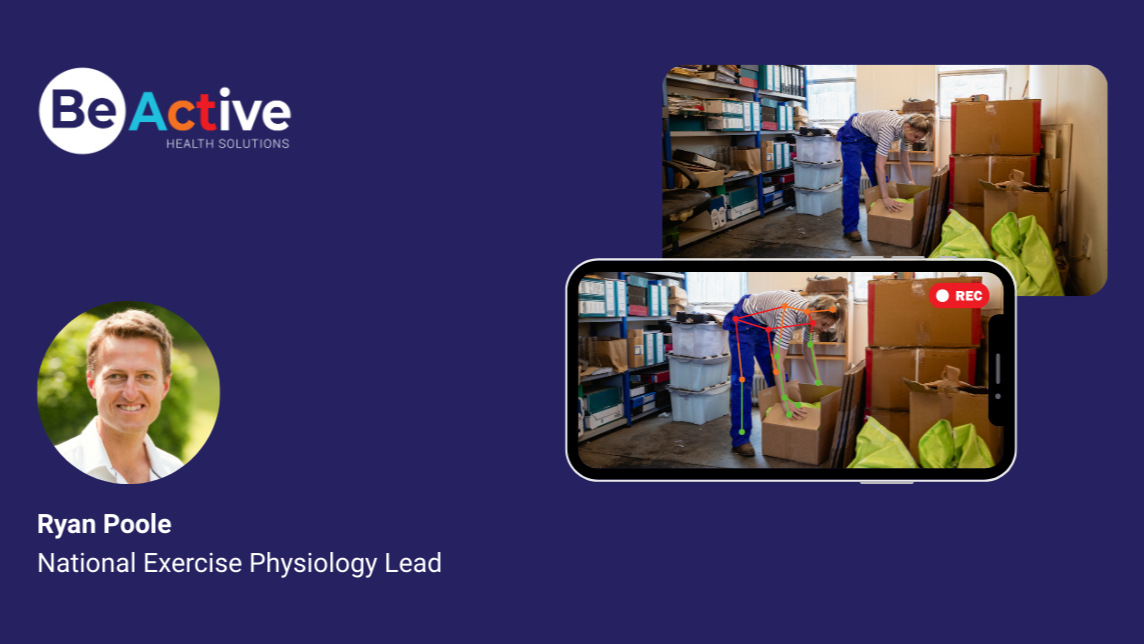
Article by: Ryan Poole, National Exercise Physiology Lead
Workplace safety has long been built on observation, manual reporting, and responding after incidents occur. But artificial intelligence (AI) is changing that.
AI enables organisations to move from reactive to proactive – analysing data patterns to identify risks before they turn into injuries. Instead of reacting, we can now predict and prevent.
How AI captures and uses data
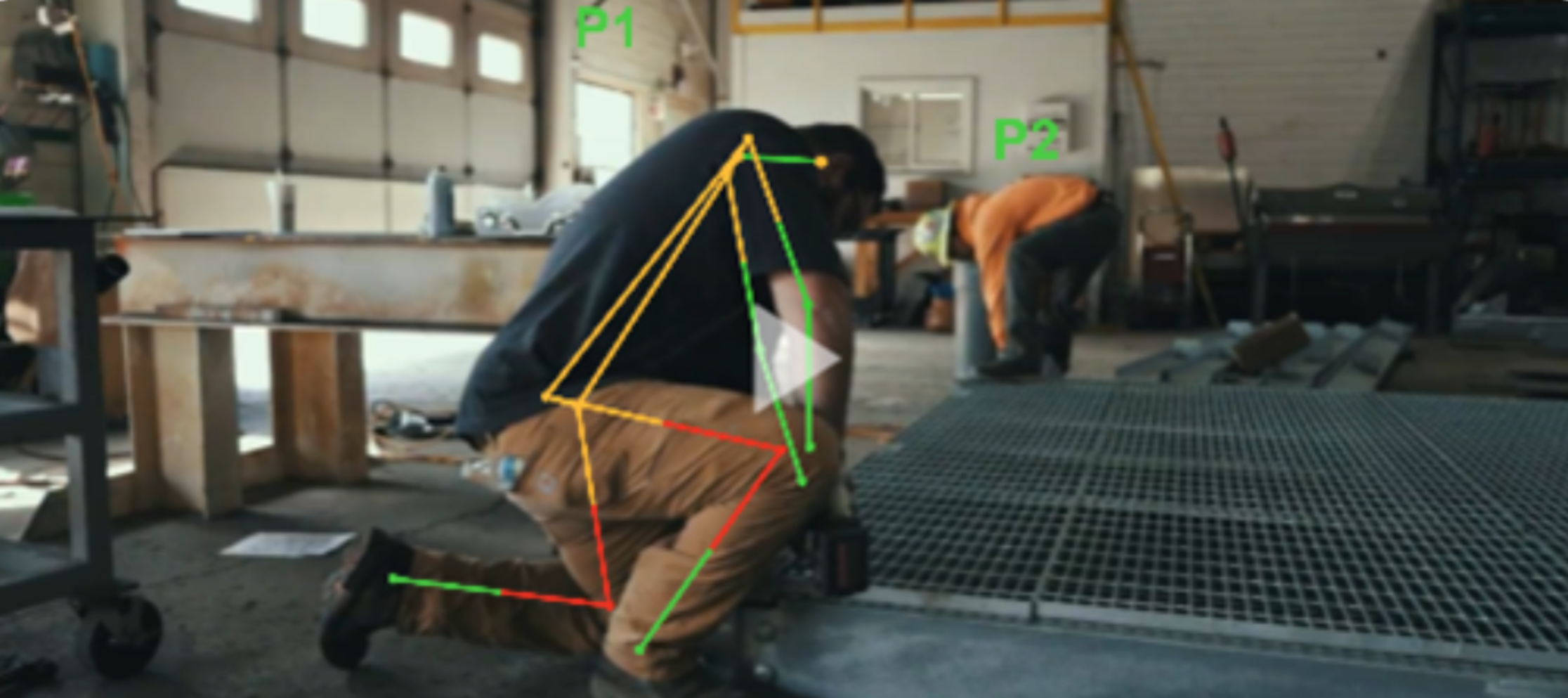
AI-powered systems can now be used on mobile devices to detect movements and instantly data output for actionable insights. With built-in algorithms, quantified loads and durations in movements, AI can help identify musculoskeletal risk factors and enables evidence-based task design and job rotation.
By combining these inputs, AI creates a holistic view of where risks emerge and how they develop over time.
How the technology works
AI can process vast amounts of data in seconds, detecting patterns that humans might miss.
A 2025 survey on machine learning for workplace injury analysis found that AI models can identify recurring strain patterns linked to specific tasks or body regions — allowing early intervention before an injury occurs (Journal of Big Data, 2025).
Meanwhile, AI-powered ergonomics research has shown that computer vision can detect unsafe postures in real time, prompting workers to self-correct and reduce musculoskeletal strain (RSIS International, 2025).
In practice, this means risks can be identified earlier, feedback can be immediate, and prevention becomes part of everyday work.
Turning insights into action
The real value of AI lies in how organisations use the information. AI-driven insights can help businesses:
- Deliver targeted safety training based on specific job risks
- Adjust rosters or work design to reduce fatigue and strain
- Empower workers with real-time feedback to improve posture or technique
These are practical, evidence-based changes that make workplaces safer, healthier, and more resilient.
Balancing technology and human judgement
Researchers have noted that AI should complement – not replace – human expertise (MDPI, 2025). AI can handle complex data analysis, while people bring context, empathy, and experience.
Together, they create stronger, more proactive safety cultures built on transparency and trust.
Empower employee health, safety and productivity with AI
AIMOTION is one of the newest AI-powered services which combines advanced AI technology with practical workplace expertise to match employees with the right jobs, reduce musculoskeletal injury risk, and improve workforce health.
Affordable and scalable, AIMOTION makes proactive risk reduction achievable for businesses across multiple industries in Australia.
References
- Exploring Human–AI Dynamics in Enhancing Workplace Health and Safety: A Narrative Review, International Journal of Environmental Research and Public Health, 2025 (MDPI).
- A Comprehensive Survey on Machine Learning for Workplace Injury Analysis, Journal of Big Data, 2025 (SpringerOpen).
- AI-Powered Ergonomics: Enhancing Workplace Safety through Posture Detection, International Journal of Research and Scientific Innovation, 2025 (RSIS International).