


Article by: Ryan Poole, National Exercise Physiology Lead
Traditional safety programs often apply a “one-size-fits-all” approach, but every worker is different – from their body type and role to their environment and risk profile.
AI is changing how we manage workplace safety, allowing organisations to move from general guidelines to personalised injury prevention.
Why a tailored approach matters
Different work roles bring different risk exposures. The daily physical demands of an office worker are completely different from those of warehouse staff. On top of this, a person’s body type, baseline strength and mobility all influence their susceptibility to strain or fatigue.
When we tailor our support to the individual, the results are significant. Implementing automated posture monitoring has been shown to lead to a 25% reduction in lifting-related injuries in industrial environments and a 30% decrease in physical discomfort in office settings (RSIS International, 2025).
Targeted risk reduction helps:
- Address risks accurately before they turn into common musculoskeletal injuries and long-term workers’ compensation claims
- Employees feel valued and supported, by designing safety programs specifically for them
Pairing AI with human experience
AI is a tool to complement human expertise, not replace it. The real value of technology lies in efficiency and scalability, which allows ergonomics to shift from a reactive discipline into a proactive strategy across multiple industries – identifying physical overloads before an injury occurs (MDPI, 2026).
By combining AI data insights with experienced injury prevention consultants, organisations can implement:
- Personalised injury prevention programs based on the specific business, task and person
- Ergonomic adjustments tailored exactly to a worker’s height, reach and working style
- Task rotation and workload adjustments informed by objective risk insights rather than subjective observation
How AIMOTION can help
AIMOTION is a service that combines advanced AI technology with clinical expertise to match employees with the right jobs and reduce musculoskeletal injury risk.
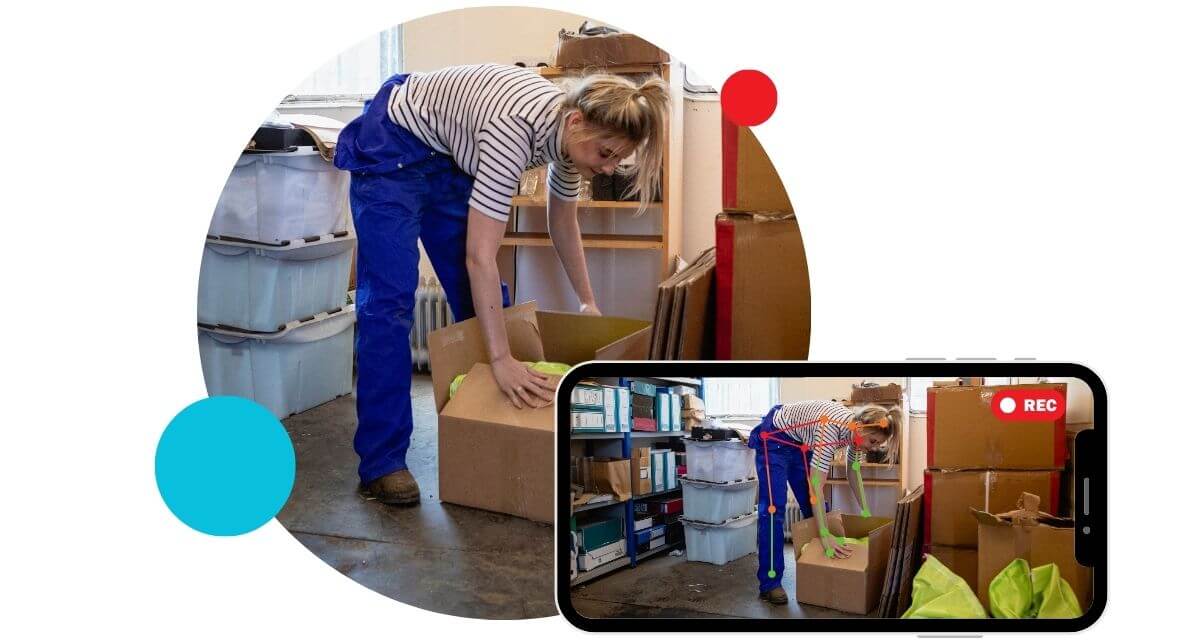
Using any mobile device, a person’s musculoskeletal movements are accurately assessed, without the need for wearable sensors or halting production (MDPI, 2026). With built-in algorithms, the AI-powered technology quantifies loads and durations in movements, identifies musculoskeletal risk factors and enables evidence-based task design and job rotation.
Affordable and scalable, AIMOTION makes proactive risk reduction achievable for organisations across multiple industries in Australia.
The benefits for employers and employees
Shifting to a personalised, proactive model delivers practical, evidence-based changes that make workplaces safer and more resilient. The benefits include:
- Fewer injuries, particularly musculoskeletal and repetitive strain injuries
- Higher productivity and efficiency due to reduced fatigue and discomfort
- Stronger employee engagement – building a culture of wellbeing and retention
- Better long-term workforce sustainability and reduced turnover
- A fast and scalable model for large organisations
- Reduced costs relating to insurance premiums and cost per case
Instead of reacting, we can now predict and prevent.
Click here to discover how AIMOTION makes proactive risk reduction achievable for your organisation.
References
- AI-Powered Ergonomics: Enhancing Workplace Safety through Posture Detection, International Journal of Research and Scientific Innovation, 2025 (RSIS International).
- Artificial Intelligence and Emerging Risks in Occupational Safety and Health, 2026 (MDPI).
- Artificial Intelligence in Construction Health and Safety: Use Cases, Benefits and Barriers, 2026 (MDPI).